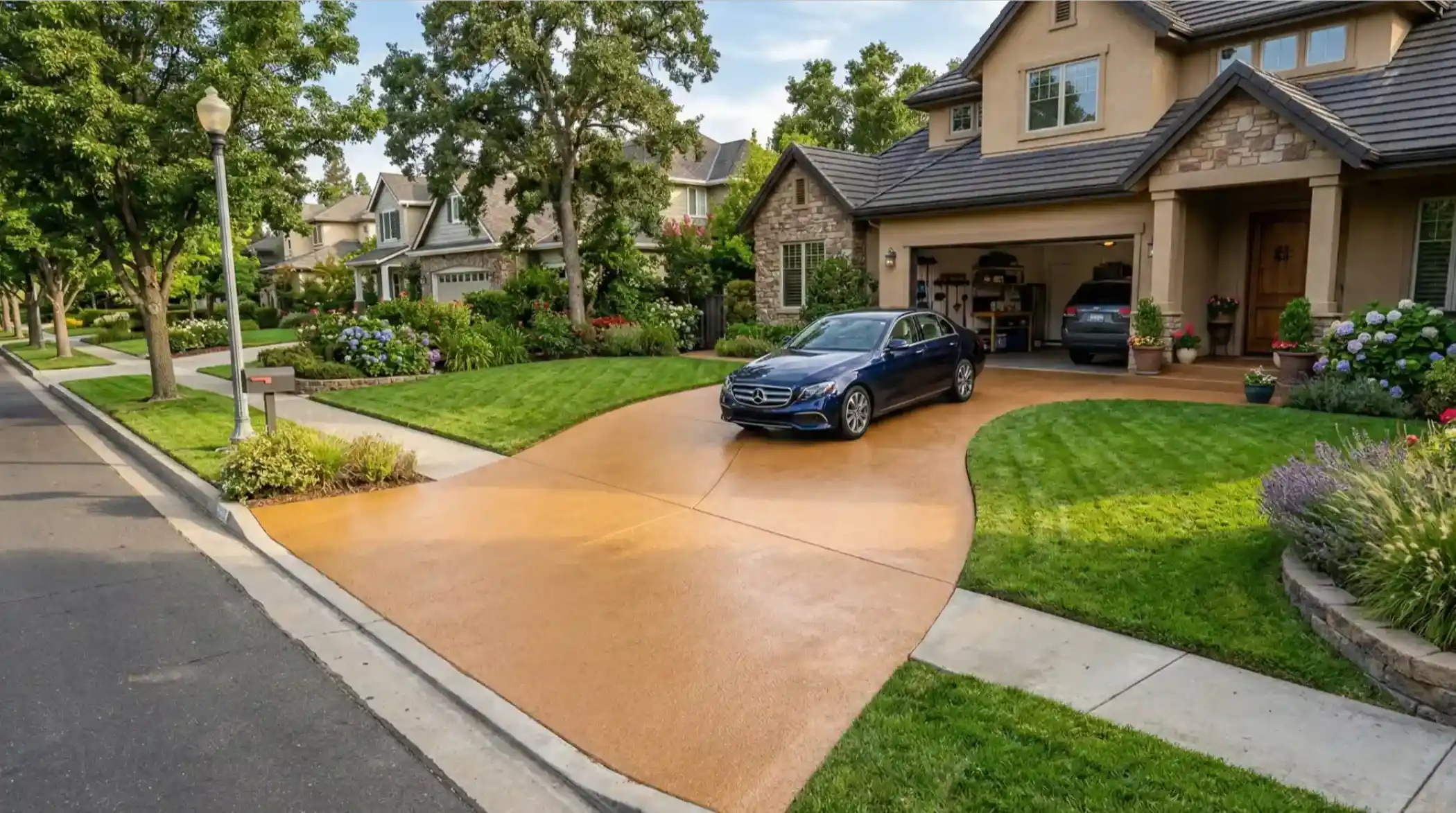
Best Driveway Coatings in 2026: Epoxy vs. Polyurea vs. Polyaspartic for Outdoor Concrete
Your garage floor gets all the attention, but what about the concrete between the street and the garage door? Driveways take more abuse than any other concrete surface on your property — UV exposure, vehicle weight, oil drips, freeze-thaw cycles, rain, and road salt. An uncoated concrete driveway will crack, stain, pit, and deteriorate faster than most homeowners expect.
The right coating can extend the life of your driveway by a decade or more while making it look like it was poured yesterday. But outdoor coatings have very different requirements than indoor garage coatings, and the wrong product in this application will fail fast. At Garage Floor Coating Finder, we connect homeowners with professional coating contractors who handle both garage floors and driveways. Here's what to know before you coat your driveway.
Can You Use Garage Floor Coating on a Driveway?
Not necessarily. The coating that works inside your garage may not survive outside. Indoor coatings are protected from UV light, temperature swings, and direct weather exposure. A driveway gets all three, plus standing water and significantly more thermal stress from direct sun hitting the concrete surface.
According to West Coast Epoxy, outdoor concrete coatings require UV stability, flexibility to handle thermal expansion and contraction, and moisture resistance that many indoor-rated products don't provide. Using an indoor-only epoxy on a driveway is one of the fastest ways to guarantee a peeling, yellowed failure within a year or two.
How Do the Major Coating Types Compare for Driveways?
| Property | Polyurea | Polyaspartic | Epoxy |
| UV Stability | Excellent | Excellent | Poor — yellows and chalks |
| Flexibility | High — handles expansion/contraction | Moderate to high | Rigid — cracks under thermal stress |
| Freeze-Thaw Resistance | Excellent | Very good | Poor — delaminates over cycles |
| Moisture Resistance | Excellent — non-porous barrier | Excellent | Good but vulnerable at edges |
| Cure Time | Fast — drive on in 24 hours | Fast — drive on in 24 hours | Slow — 72+ hours for vehicle traffic |
| Outdoor Recommended? | Yes | Yes | No |
The bottom line: polyurea and polyaspartic are the only professional-grade options for driveway coatings. Epoxy lacks the UV stability and flexibility needed for outdoor concrete. Our epoxy vs. polyaspartic comparison covers the chemical differences in detail.
What Should You Look For in a Driveway Coating?
UV Stability
Direct sunlight degrades most coatings over time. A driveway gets hours of direct UV exposure every day — far more than a garage interior that only sees indirect light through an open door. According to Armor Thane, polyurea coatings maintain their color and structural integrity under prolonged UV exposure, while standard epoxy coatings begin yellowing within months of outdoor installation.
Look for coatings with built-in UV inhibitors or inherent UV resistance (polyaspartic coatings have this by design). Avoid any product that doesn't explicitly state it's rated for outdoor or exterior use.
Slip Resistance
A smooth, glossy driveway coating becomes dangerously slippery when wet — and driveways get wet constantly. Rain, snow, sprinkler overspray, and morning dew all create slip hazards. Any driveway coating system needs anti-slip aggregate or texture broadcast into the topcoat.
According to Integrity Concrete Coatings, the same slip-resistant additives used in pool deck coatings — aluminum oxide, polymer beads, or textured quartz — are essential for driveway applications. Your contractor should discuss slip resistance as a standard part of the specification, not an optional add-on.
Flexibility and Thermal Tolerance
Driveways expand and contract with temperature changes. In climates with hot summers and cold winters, the concrete surface can experience a temperature range of 150°F or more over the course of a year. A rigid coating cracks under this stress. A flexible coating moves with the concrete.
Polyurea is the standout here — it has significantly higher elongation (flexibility) than epoxy, which means it can stretch and compress with the slab without cracking or delaminating. This is especially important in states with severe freeze-thaw cycles like Minnesota, Wisconsin, Michigan, and Colorado.
Chemical and Stain Resistance
Driveways catch everything: motor oil, transmission fluid, brake dust, tire rubber, fertilizer, de-icing chemicals, and whatever drips from your vehicles. A good driveway coating creates a non-porous barrier that prevents these substances from penetrating and staining the concrete — making cleanup a matter of hosing it off rather than replacing the slab.
How Much Does a Driveway Coating Cost?
Professional driveway coating typically runs $4–$8 per square foot installed, depending on the coating system, the condition of the concrete, and your region. A standard two-car driveway (400-600 sq ft) would cost roughly $2,000–$4,800 for a full polyurea or polyaspartic system with slip-resistant finish.
That's more than a garage floor coating on a per-square-foot basis because of the additional preparation required for outdoor concrete (more extensive grinding, crack repair, moisture mitigation) and the premium outdoor-rated products used. But it's a fraction of the cost of replacing a deteriorated driveway — concrete replacement runs $8–$15+ per square foot.
For comparison, see our 2026 garage floor coating cost guide.
Is Surface Preparation Different for Driveways?
The same fundamentals apply — diamond grinding is essential for a proper bond. But outdoor concrete often has additional challenges:
- More severe cracking: Outdoor concrete experiences more thermal stress and settling, leading to wider and deeper cracks that need more extensive repair
- Deeper contamination: Years of oil, chemicals, and organic matter soak deeper into outdoor concrete than indoor surfaces
- Existing sealers: Many driveways have been sealed with acrylic or penetrating sealers that must be completely removed before coating
- Moisture issues: Outdoor concrete is exposed to more groundwater and rain saturation, requiring thorough moisture testing
Our guide on why concrete grinding matters covers the preparation process in detail.
What About Decorative Options?
Driveway coatings aren't limited to solid gray. The same decorative options available for garage floors — flake broadcast, quartz broadcast, and even metallic effects — can be applied to driveways. The most popular driveway finishes tend to be earth tones (tan, sandstone, brown, gray) with a full-broadcast flake or quartz system for both aesthetics and texture.
Metallic finishes are occasionally used for driveways on high-end properties for a dramatic visual effect, though flake and quartz systems are far more common due to their superior slip resistance and durability under vehicle traffic.
How Long Does a Driveway Coating Last?
A properly installed polyurea or polyaspartic driveway coating should last 10–15+ years with normal residential use. The lifespan depends on climate severity (more freeze-thaw cycles = more stress), traffic volume, and maintenance. Regular sweeping to remove grit and occasional rinsing are all that's needed to maximize longevity.
Compare that to an uncoated concrete driveway, which typically begins showing significant wear, staining, and cracking within 5–8 years in harsh climates. The coating doesn't just look better — it extends the life of the concrete underneath by protecting it from the elements that cause deterioration.
Find a Driveway Coating Contractor
Not all garage floor contractors handle driveways — outdoor concrete requires different products and techniques. Browse professional coating contractors in your area and ask specifically about driveway coating experience. Whether you're in Arizona, Ohio, North Carolina, or anywhere else, we'll help you find a contractor who uses outdoor-rated systems and understands the unique demands of driveway applications.
Bottom Line
Driveway coatings require UV stability, flexibility, freeze-thaw resistance, and slip resistance — which means polyurea and polyaspartic are the only professional options. Epoxy is a poor choice for outdoor concrete. Expect to pay $4–$8 per square foot for a professional installation, and insist on diamond grinding, proper crack repair, and slip-resistant texture. A quality driveway coating protects your concrete from the elements, eliminates staining, and can last 15+ years — all while making your property look significantly better from the curb.
Looking for a Garage Floor Coating Pro?
Browse our directory of verified contractors in your area.
Find Contractors